









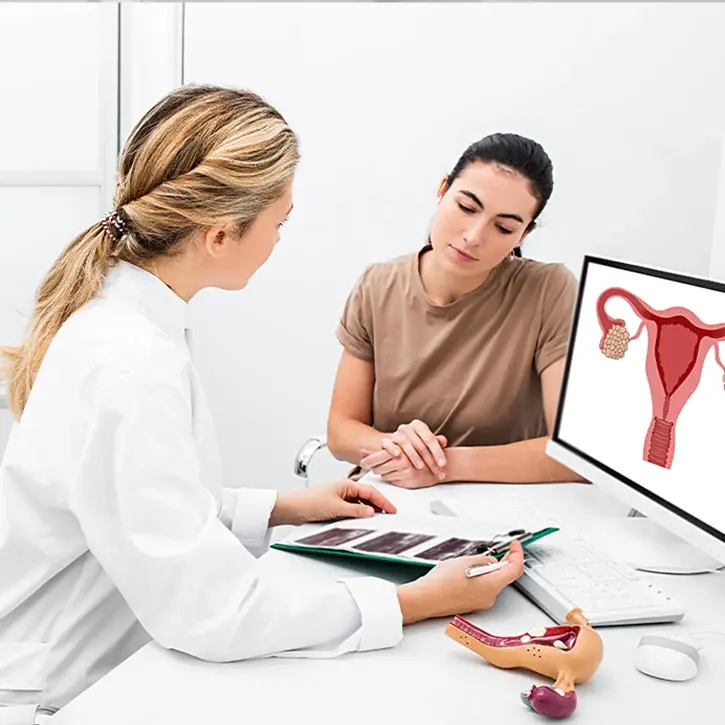
Vulvoscopy
Persistent vulvar symptoms deserve an expert look. A vulvoscopy provides the detailed view needed to identify what's happening and get you the right care, right here in our office.
What is a Vulvoscopy?
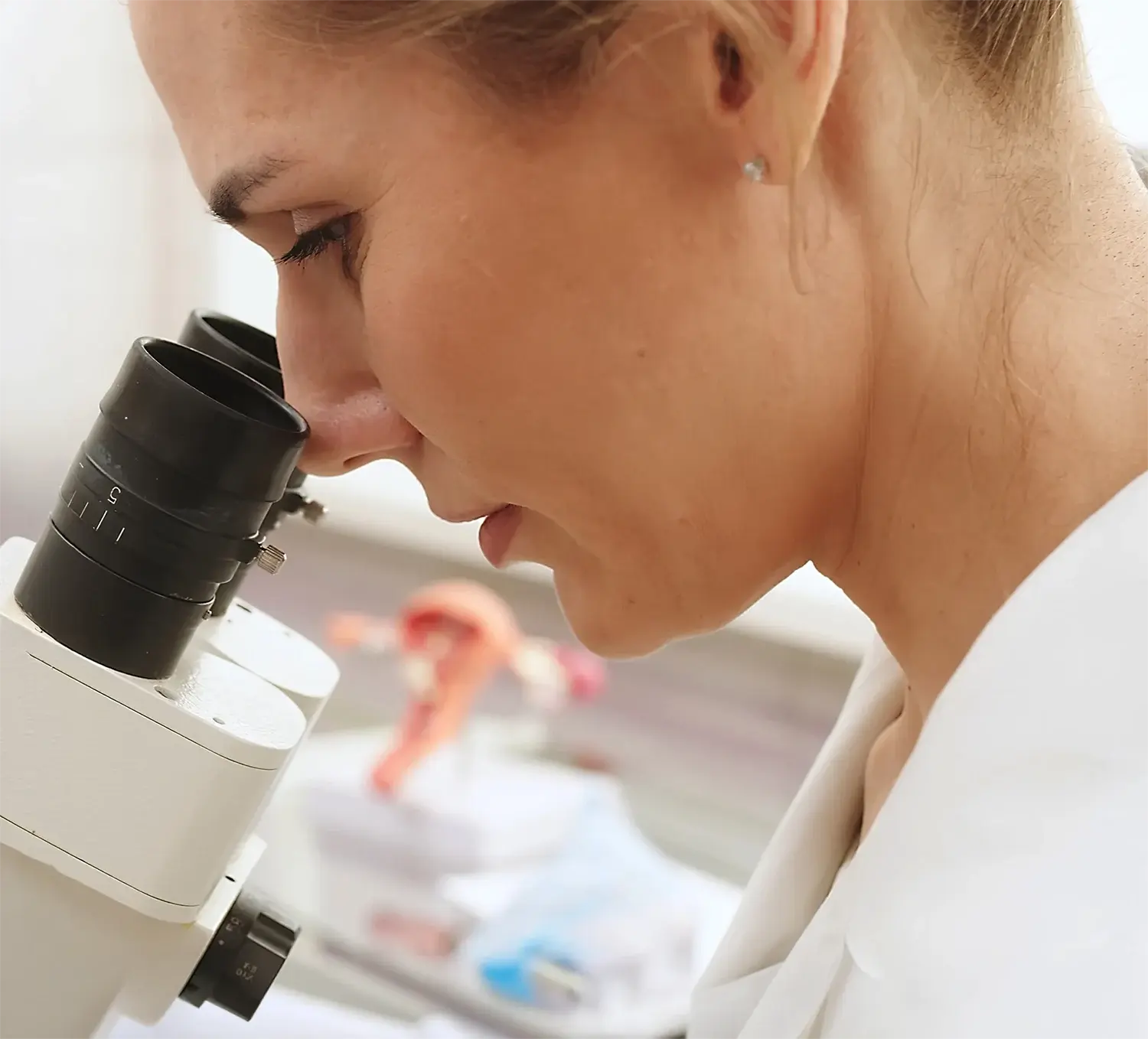
A vulvoscopy is a detailed in-office examination of the vulva, the external genital tissue surrounding the vaginal opening, using a lighted magnifying instrument called a colposcope. It gives your provider a close, magnified view of the vulvar skin to identify changes, abnormalities, or conditions that are not visible to the naked eye during a routine exam.
If an area of concern is identified during the exam, a small targeted biopsy may be taken at the same visit, with local anesthetic applied beforehand to minimize discomfort.
Vulvar symptoms are frequently underreported and undertreated. If something has felt off for weeks, months, or longer, a vulvoscopy is often the first step toward finally getting a clear answer.
Your healthcare provider may recommend a vulvoscopy if you have any of the following signs or symptoms in the area of the vulva:
- Inflammation (vaginitis)
- Itchiness
- Lesions, sores, or rash
- Redness or change in color or texture
- Soreness or a burning sensation
- Irregular vaginal discharge or bleeding
- Pain with urination or sex
No special preparation is required for a vulvoscopy. Your provider will review your symptoms and medical history at the start of your appointment. You do not need to fast or arrange for a driver afterward. If you are currently experiencing an active infection or have recently used topical creams or treatments, let your provider know, as these may affect the examination.
Wear comfortable clothing and plan for a visit similar in length to a routine gynecologic exam. You are welcome to bring a support person if that helps you feel more comfortable.
You will be positioned as you would for a standard pelvic exam. Your provider will use a colposcope, a lighted magnifying device that is the same specialized instrument used during a colposcopy after an abnormal Pap smear. During a vulvoscopy, however, the colposcope is positioned externally and does not touch you or enter the vagina.
The colposcope provides a well-lit, magnified view of the folds of vulvar skin, allowing your provider to examine tissue in detail that a standard exam cannot reveal. The entire examination takes ten minutes or less. If your provider identifies an area that warrants closer evaluation, a small biopsy may be taken at the same visit. Local anesthetic is applied before any biopsy, so you should not feel pain during the collection.
If no biopsy was taken, you can return to normal activities immediately. If a biopsy was performed, you may experience mild soreness or light spotting for a day or two. Your provider will give you specific care instructions before you leave.
Biopsy results are typically available within one to two weeks. Your Women's HealthFirst provider will follow up with you directly to discuss findings and, if needed, outline a treatment plan. Vulvoscopy results without biopsy are usually discussed with you at the end of the same appointment.
Vulvoscopy: What to Expect
Insurance Information
Vulvoscopy is covered by most major health insurance plans when it is medically indicated. Your specific coverage will depend on your plan, your diagnosis, and how the procedure is coded. If a biopsy is taken during the exam, laboratory fees may be billed separately. Our team can help you verify your benefits before your appointment, walk you through any anticipated costs, and make sure you feel informed ahead of time. We accept Aetna, Blue Shield PPO, Cigna HMO, Cofinity PPO, and most major insurance plans.
Patient Resources
From accessing your patient portal and downloading pre-visit forms to reviewing your insurance information and exploring our patient education library, we make it easy to stay informed, prepared, and confident in your care every step of the way.
Meet Our OB-GYN Providers

Find a Gynecologist Near You
Office Locations
Palatine, IL
Schaumburg, IL
Hoffman Estates, IL
Bartlett, IL
You’ve Waited Long Enough for Answers.
They use the same instrument, the colposcope, but examine different areas. A colposcopy examines the cervix, typically after an abnormal Pap smear. A vulvoscopy examines the external vulvar tissue to evaluate symptoms like itching, skin changes, lesions, or pain.
The examination itself is not painful. The colposcope is positioned externally and does not touch you. If a biopsy is taken during the exam, a local anesthetic is applied first, so you should not feel significant pain. Some mild soreness at the biopsy site afterward is normal.
The examination takes ten minutes or less, including preparation and time with your provider before and after. Most appointments are similar in length to a standard gynecologic visit.
No special preparation is required. Wear comfortable clothing and let your provider know if you are currently using any topical creams or treatments, or if you have an active infection. You do not need to fast or arrange for transportation afterward.
Vulvoscopy can help identify lichen sclerosus, lichen planus, vulvar dysplasia, vulvar intraepithelial neoplasia (VIN), chronic vulvovaginitis, contact dermatitis, and other skin conditions affecting the vulvar area. It is also used to evaluate unexplained vulvar pain and lesions.
Not necessarily. A biopsy is only taken if your provider identifies a specific area during the exam that warrants tissue analysis. Many vulvoscopy examinations are completed without a biopsy.
If no biopsy was taken, your provider will discuss findings with you at the end of the appointment. If a biopsy is performed, results are typically available within one to two weeks.